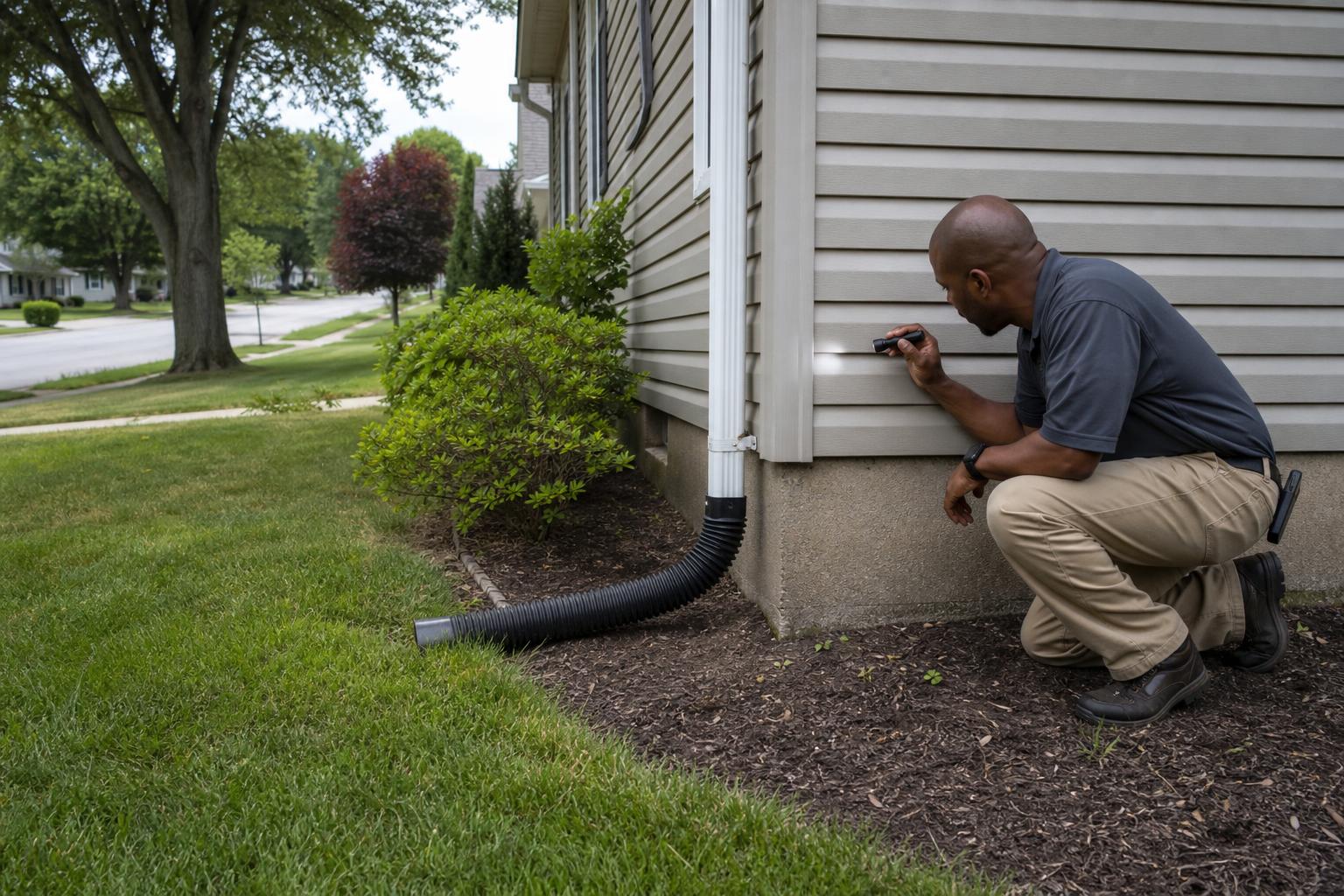
Most of the termite prevention that matters in Southwest Indiana is not a product. It is water, wood and dirt, and where the three meet at your foundation. This is the checklist we walk with homeowners around Evansville: what you can fix this weekend, what we handle, and the one thing prevention never replaces.
- Inspected byRichard, Indiana 7B termite licensed
- MonitoringBait stations checked on a schedule
- ServingEvansville and Southwest Indiana
- Since2020, fully insured
Why Southwest Indiana homes are termite country
Subterranean termites need moisture, wood and a way to move between the two without drying out. The Ohio River flatland gives them all three. Summers are long and humid, and the clay soils around Evansville hold water for days after a storm, which keeps the ground next to a foundation damp well into July.
Then there is the housing stock. Many homes here are older wood-frame houses on crawlspaces, some with dirt floors, so the sill plate and joists are a short trip from the soil. Newer slab homes have expansion joints and plumbing penetrations a colony can follow into a wall. None of this means your house has termites. It means the conditions are here, and prevention is about making your home the least inviting one on the block.
The homeowner checklist
Walk the outside of your house each spring and fall with this list. Most items cost little or nothing.
Moisture
- Gutters and downspouts. Keep them clear, and add extensions that carry water four to six feet from the foundation, not onto the bed against the house.
- Grading. Soil should slope away from the house. Build up any dip that holds water after rain.
- Crawlspace. A vapor barrier over a dirt floor cuts the humidity that soaks into joists. Keep vents clear, or if the space is sealed and conditioned, make sure that system still runs.
- Leaks. A dripping hose bib, a sweating AC line or a slow leak under a sink keeps one spot wet year-round. Termites find those spots.
Wood-to-soil contact
- Siding clearance. You should see several inches of bare foundation between the soil and the bottom of the siding. If dirt or mulch has crept up, pull it back.
- Deck and porch posts. Posts belong on concrete piers or metal standoffs, not in the dirt. Check the ledger board where the deck meets the house.
- Firewood. Stack it off the ground and away from the house, not against the back wall all winter.
- Leftover lumber. Form boards, grade stakes and scrap buried after construction or a remodel are a buffet. If you know they are there, dig them out.
Mulch and landscaping
- Keep mulch back. Mulch holds moisture and hides activity. Keep it a few inches from the foundation and shallow near the house.
- Trim shrubs. Plants against the siding trap humidity and hide the foundation. Leave a gap you can look through.
Entry points
- Foundation cracks. Termites need a gap thinner than a credit card. Seal cracks in block or poured walls.
- Utility penetrations. Where water, gas and electric lines pass through the foundation or slab, seal around them.
- Expansion joints and bath traps. On a slab home, the garage-to-house joint and the open dirt under a tub are the usual routes in. Know where yours are so an inspector can check them.
What we do for prevention
The checklist is your half. Ours is finding activity early and, where the risk is high enough, putting a treated zone between the colony and your house. Richard looks first and tells you which of these, if any, your home needs.
An annual termite inspection, done by the owner
Richard holds the Indiana 7B termite license and does most inspections himself. Once a year he checks the sill, joists, foundation walls and crawlspace, and shows you what he sees. Details on our termite inspection page.
Bait-station monitoring
Stations go in the soil around the perimeter and get checked on a schedule. If termites hit one, we know before they reach the framing, and the bait goes to work on the colony. For many homes this is the whole program.
A preventive liquid barrier for high-risk situations
Some homes earn a treated soil barrier before there is damage: a damp dirt-floor crawlspace, active termites next door, a history of treatment, or a slab with many unsealed penetrations. Richard will say plainly whether yours is one. If you are building or adding on, ask about treating the soil before the slab goes in.
If you already have us out for general pest service, the annual termite check folds into a recurring plan so it happens every year without you having to remember.
Does prevention replace an inspection?
No. Here is why, plainly.
Everything on the checklist lowers your odds. None of it tells you whether a colony is already in the sill plate. Termites work inside the wood and behind the paint, and the first visible sign is often a swarm in April or a soft floor years after they moved in. A homeowner who did every item above can still have termites they cannot see. Prevention makes the annual inspection more likely to come back clean; it does not make it optional.
Who handles what
| Risk factor | What to do | Who does it |
|---|---|---|
| Water pooling at the foundation | Clean gutters, add downspout extensions, regrade low spots | You |
| Damp crawlspace | Vapor barrier, clear vents or working conditioning system | You (or a crawlspace contractor) |
| Mulch or soil against siding | Pull back several inches, thin the mulch, trim shrubs | You |
| Deck posts, firewood, buried lumber | Get wood off the soil, remove scrap | You |
| Cracks and utility penetrations | Seal them, note where they are | You |
| Hidden activity in framing | Annual owner-led inspection | Us |
| Colonies approaching from the yard | Bait-station monitoring | Us |
| High-risk crawlspace, slab or history | Preventive liquid barrier | Us |
| New build or addition | Pre-construction soil treatment | Us |
Want a licensed set of eyes on your foundation?
Richard comes out, walks the checklist with you, checks the places you cannot, and tells you what your home actually needs. Free, no pressure.
Termite services
Termite control
How we find, treat and follow up on termites across Southwest Indiana.
Termite inspection and WDI reports
Free owner-led inspections for homeowners, and WDI reports for closings.
Termite treatment
Liquid barrier or bait stations when termites are active, and how we choose.
Termite prevention questions, answered plainly
How far should mulch be from my foundation?
A few inches of bare ground or gravel between mulch and foundation lets the soil dry and lets you see mud tubes if they show up. Keep the mulch shallow near the house. Deep, wet mulch against siding is the most common thing we see on homes with activity.
Do bait stations attract termites to my yard?
No. Termites forage through the soil anyway; a station just puts something in their path that we can check. If they find it, they carry the bait back to the colony. If they never find it, that is useful too. Stations do not draw termites in from elsewhere.
I have a crawlspace with a dirt floor. Am I at higher risk?
Usually, yes, especially in the damp clay soils around Evansville. A vapor barrier and working ventilation make a real difference, and this is one situation where Richard may recommend a preventive barrier rather than monitoring alone. It depends on what he finds under there.
How often should a home in Southwest Indiana be inspected for termites?
Once a year, and that is what the recurring plan includes. Spring, around swarm season, is a good time because activity is easiest to spot. If you find swarmers, mud tubes or soft wood between visits, call and we will come sooner.
Is a preventive treatment worth it if I have never had termites?
Sometimes. It depends on your foundation, how wet the soil stays, whether neighbors have had treatments and what the inspection shows. For a dry, well-graded slab, monitoring is often enough. For a damp dirt crawlspace, a barrier can be the better call. Richard will tell you which, or if the answer is neither.