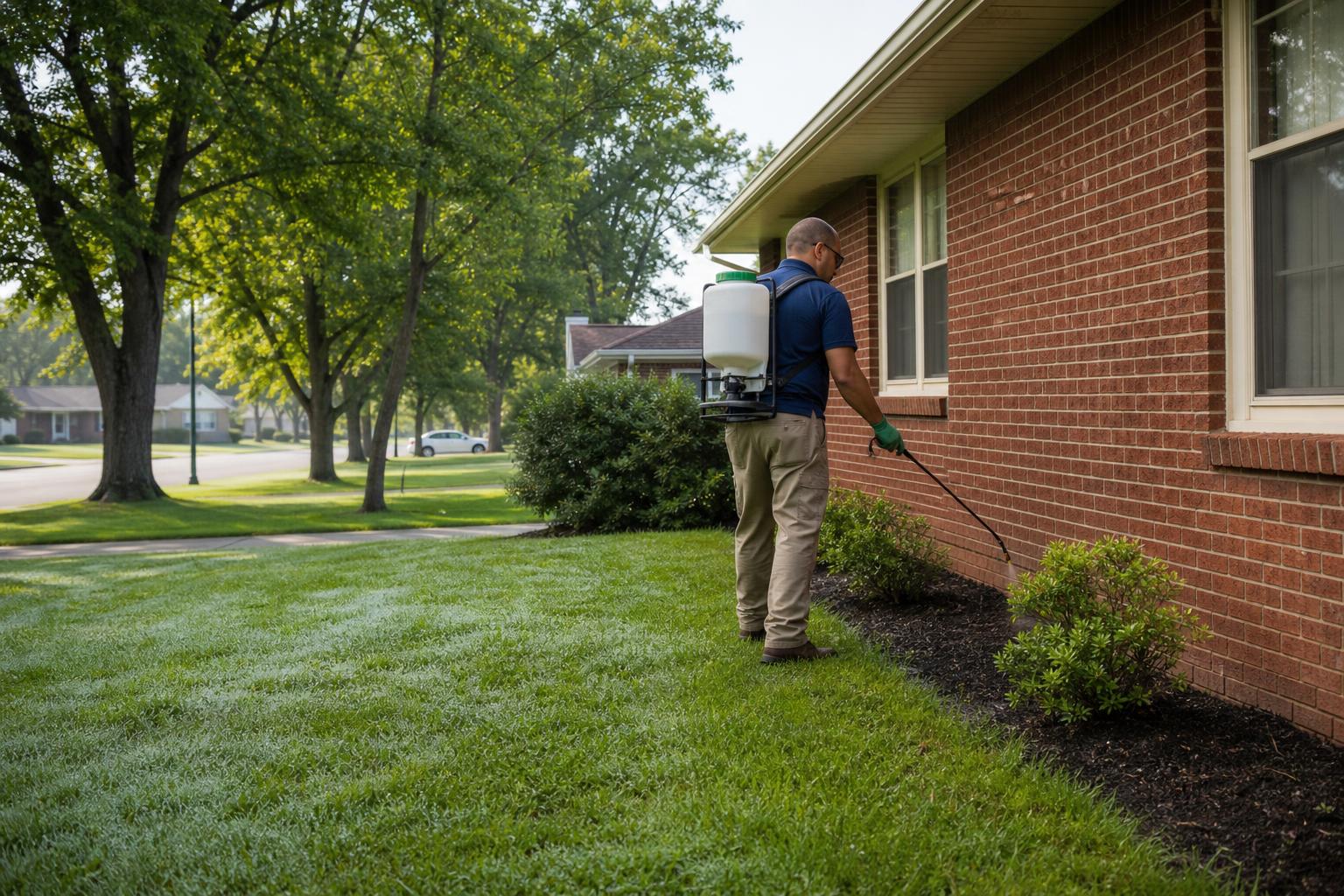
A recurring pest control plan is a set of scheduled visits, typically quarterly, that keep ants, spiders, wasps, roaches, mice and the seasonal invaders from getting established in the first place. We treat the exterior perimeter every visit, the interior whenever you ask, and we set the schedule to your home rather than to a plan name. Richard inspects first, so the plan fits what your house actually has.
- ScheduleTypically quarterly, set to your home
- Every visitExterior perimeter treatment
- InteriorOn request, at no extra fuss
- Inspected byRichard, Indiana 7A + 7B licensed
The same ants every April, the same mice every October
If you have lived in an Evansville-area house for more than a year, you know its habits. Ants on the counter after the first warm rain. Wasps under the same corner of the eaves every June. Scratching in the garage wall the week the nights turn cold. Each time you spray or call somebody, it quiets down, and next season it happens again.
That cycle is what a house in Southwest Indiana does when treatment only ever arrives after the pests do. A recurring plan flips the timing. We treat the outside of your home before each season’s pest is ready to move in, and when something does get past that, the call is part of the plan, not a new job.
What a recurring plan actually covers
We do not sell tiers with names. We sell a schedule, and we set it to your home. For most houses that is a visit roughly every three months, timed to the Evansville pest calendar. Older homes with many entry points, houses backing onto woods or fields, and heavy landscaping against the foundation sometimes need a tighter schedule the first year. Richard tells you which you are at the inspection.
- Exterior perimeter, every visit. A treated band along the foundation, around door and window frames, under eaves, and where pipes and utility lines enter the house. This is what keeps most pests outside.
- Interior, on request. If you have seen something inside, say so when we call ahead and we check the kitchen, bathroom and garage on the same visit.
- Nests, webs and entry points. We knock down reachable nests and webbing, and note gaps and torn screens so you can fix them or ask us about exclusion.
- A note on what we found. Each visit ends with a short record of what we saw and treated. If something is feeding the problem, such as firewood stacked against the siding, we tell you plainly.
- Calls between visits. If ants show up in July or a mouse appears in January, you call, we come. That is what the schedule is for.
What each visit focuses on in Southwest Indiana
Our region has wet springs, humid summers and winters cold enough that everything wants to come indoors. Each visit is aimed at the pest that is about to show up, not the one that already did.
| Visit | Main focus | What the technician does |
|---|---|---|
| Spring (March to May) | Ants, termite swarmer check, early wasps | Exterior barrier and baiting for ants; a check of foundation walls and window sills for termite swarmers or mud tubes, with a full termite inspection if we see either; eave treatment before paper wasps settle in |
| Summer (June to August) | Wasps and hornets, spiders, mosquitoes | Nest removal and eave treatment; web knockdown around porch lights, decks and garage doors; the yard itself is covered by our mosquito control add-on |
| Fall (September to November) | Mice and rats moving in, exclusion check, fall invaders | Bait stations and traps at the garage, crawl space and utility entries; a foundation walk for gaps a mouse can use; treatment of sunny south and west walls before stink bugs, boxelder bugs and Asian lady beetles gather |
| Winter (December to February) | Interior focus: roaches, rodents, storage areas | Kitchen and bathroom plumbing voids for German cockroaches; attics, basements, garages and storage rooms for rodents; exterior perimeter where the weather allows |
How to start a plan
A free, owner-led inspection
Richard, our owner, or our operations manager walks your home with you: foundation, eaves, garage, crawl space or basement, and the spots where pests have shown up before. You see what we find.
A written plan
You get a plain-language plan: what we will treat, how often, and what you can fix yourself. If a one-time visit is all you need, the plan says that instead.
A thorough first service
The first visit is the longest. We treat the full perimeter, handle any active problem inside, remove nests and webs, and address the entry points we found. The rest of the schedule maintains that baseline.
Scheduled visits, with a call before each
Visits land roughly every three months, timed to the season. We call before we come so you can tell us what you have seen and ask for an interior check.
Between-visit calls, covered
Pests do not read calendars. If something shows up between visits, you call and we come out.
Who a recurring plan is for, and who it is not for
Recurring service fits homes that see the same pests every year, rental houses where the owner would rather not hear about ants from a tenant, and small commercial properties such as offices, shops and restaurants that need pests handled before a customer sees one.
Two things a recurring plan does not handle
Bed bugs and termites are project jobs, not maintenance visits. Bed bugs need a full bed bug treatment with heat and independent verification; termites need a proper termite treatment. A quarterly plan can catch the early signs of both, but it will not fix either. If you are weighing whether you need a plan at all, our guide on recurring vs. one-time pest control walks through it honestly.
Property managers get the same schedule with one difference: we coordinate appointments directly with tenants and keep the visit records so you are not the go-between. Details are on our commercial and property management pest control page.
Want a plan built around your house, not a brochure?
Richard or our operations manager comes out, looks at what your home actually deals with, and writes up a schedule that fits. Free, no pressure.
What a plan works alongside
Mosquito control
A seasonal yard program that pairs with summer visits.
Cockroach control
An active roach problem gets its own treatment first; the plan keeps it from returning.
Rodent control
Trapping and exclusion for rodents already inside; fall and winter visits hold the line.
All of this sits under our residential and commercial pest control service across Evansville and Southwest Indiana. See all service areas.
Recurring plan questions, answered plainly
How often will you come out?
Typically quarterly, once each season. Some homes need more frequent visits the first year, and some do fine with less once the pressure is down. We set the schedule to your home at the inspection and adjust it as the visits show.
Do I need to be home for a visit?
Not for the exterior. We call ahead, treat the perimeter and leave a note of what we did. If you want an interior check, we schedule a time you can let us in.
What if I see pests between visits?
Call us and we come out. Calls between visits are part of the plan, not a separate job.
Is the exterior treatment safe for kids, pets and my garden?
Our technicians are certified through the Office of the Indiana State Chemist and work under Richard’s Indiana 7A license, and we follow product labels exactly. We treat a targeted band along the foundation rather than blanketing the yard, and we tell you how long to keep kids and pets off treated surfaces. If you have a vegetable bed against the house, point it out and we work around it.
Can I cancel or pause the plan?
Yes. We are a local company, not a call center, and we would rather keep you because the visits work than because a contract says so. Call Richard or Gil and we sort it out.
Does the plan cover termites or bed bugs?
No. Both are project jobs with their own inspection and treatment. Spring visits include a look for termite swarmers and mud tubes, and we will say something if we see signs of either, but the treatment itself is separate. See termite control and bed bug control.