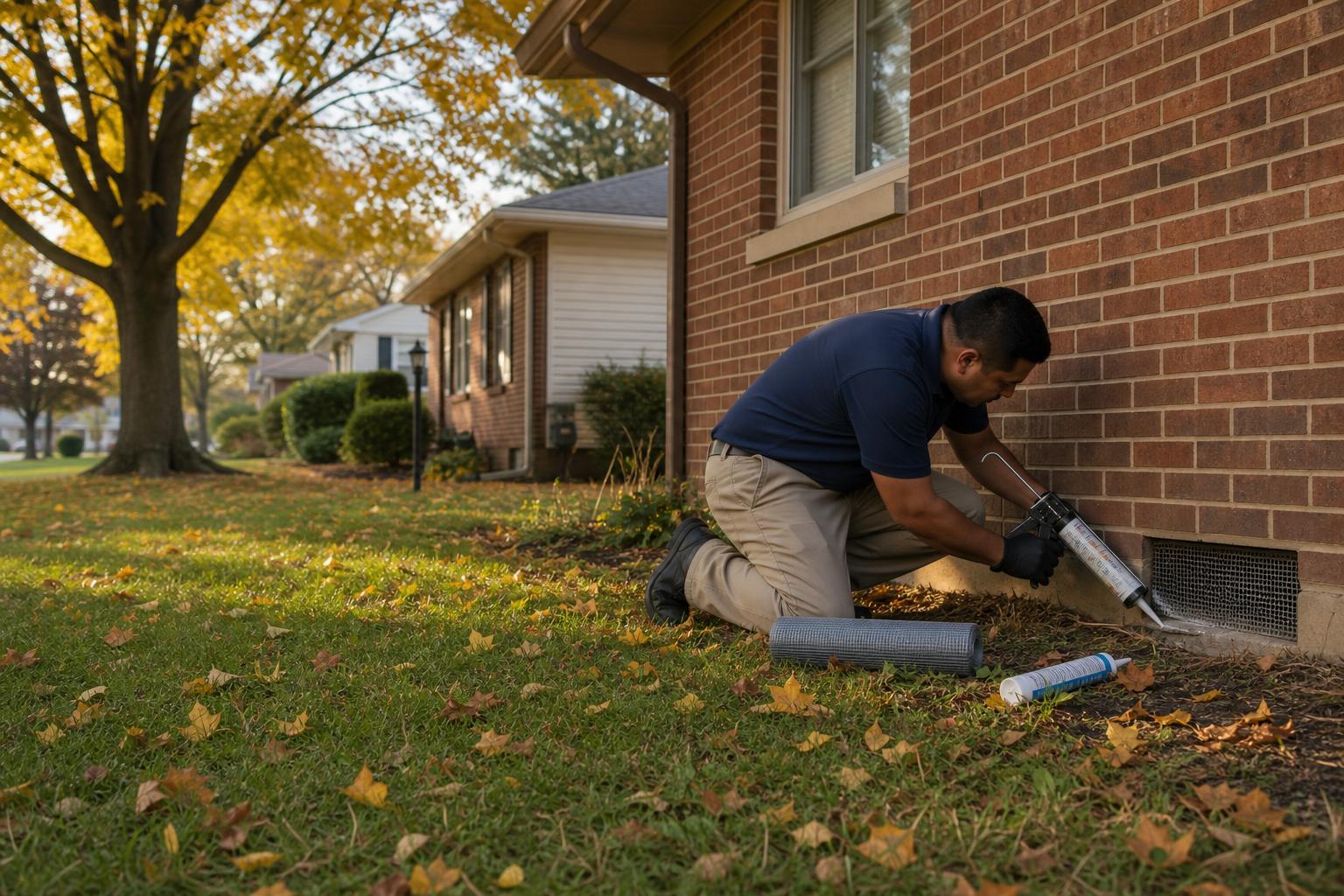
Mice and rats do not break in. They walk in through a gap you have never noticed, usually in October when the nights turn cold. That is why our rodent control in Evansville starts with a licensed inspection that finds the entry points, and why we seal them instead of just setting traps and hoping. Trapping clears out what is inside. Exclusion keeps the next family out.
- Inspected byRichard, Indiana 7A + 7B licensed
- ApproachInspect, trap, seal, follow up
- BaitTamper-resistant exterior stations only
- ServingEvansville and Southwest Indiana
Mice or rats? What we see in Southwest Indiana homes
Around Evansville, the rodent call is almost always one of two animals. House mice are the common one: small, gray-brown, and able to squeeze through a gap the width of a pencil into garages, wall voids, kitchen cabinets and attic insulation. Norway rats are bigger and mostly a ground-level problem. They burrow along foundations, come up through crawlspaces and basements, and show up more often near alleys, dumpsters and older neighborhoods with aging sewer lines.
Both follow the same calendar: late summer and fall, when the yards they lived in stop providing food and warmth. Older Evansville houses with block foundations, pier-and-beam crawlspaces and original garage doors are easy targets. So are rentals, where a gap under a door can sit for years because nobody was sure whose job it was to fix.
Signs you have rodents, not just a noise
- Droppings. Mouse droppings are rice-sized and pointed at the ends; rat droppings are closer to a raisin. Look under sinks, behind the stove, along the back of cabinets and garage walls.
- Gnaw marks. Chewed cereal boxes and pet food bags, shredded insulation, small clean-edged holes in drywall or soffit. Rats will chew through plastic, wood and soft metal.
- Noises at night. Scratching or skittering in the ceiling, walls or above the garage after the house goes quiet. Mice are light and quick; rats sound heavier.
- Grease rubs. Dark smudgy streaks along baseboards, pipes and the edges of holes. Rodents run the same routes nightly and the oil in their fur leaves a trail.
If you have seen one of these, that is what the free inspection is for. Richard will tell you what it is, where it is getting in, and what it will take to fix.
Why traps alone, or bait alone, keep failing
Most people who call us have already tried something. Snap traps caught three mice, then stopped catching anything while the noises continued. Or a bait block disappeared from the basement and a week later there was a smell in the wall. The trap or the bait was not the problem. Neither one closes the door.
As long as the gap is open, the mice inside your house are being refilled from outside. Trapping removes what is already in and does nothing about tomorrow’s arrivals. Bait has its own limits: rodents that eat it can die somewhere you cannot reach, and loose bait indoors is a hazard for pets and kids. A company that sets traps and leaves is renting you a quiet few weeks. Sealing the entry points is what actually ends it, and it is the step most often skipped because it takes time on your hands and knees.
How our rodent control works
A licensed expert finds the entry points
Richard, our owner, or our operations manager walks the perimeter, garage, crawlspace or basement, and attic. We are looking for the gaps, not just the droppings: siding-to-foundation joints, utility penetrations, vent screens, garage door corners, roofline gaps and the sill plate.
We show you what we found
You see the rubs, droppings and holes with us, and you get a plain explanation of which animal it is and how it moves through the house. Then a written plan. If it turns out to be a squirrel, we will say so.
Trapping and exterior bait stations, placed for the situation
Inside, traps go along the routes the rodents are actually using. Outside, where it makes sense, locked tamper-resistant bait stations along the foundation knock down the population trying to get in. We never use loose bait indoors.
Exclusion: sealing the gaps
The step that makes it stick. Steel wool or copper mesh packed into openings and sealed, hardware cloth over crawlspace and attic vents, door sweeps on garage and exterior doors, a proper cover on the dryer vent. We tell you about any gap that needs a contractor.
Follow-up and monitoring
We come back to check traps and stations, confirm activity has stopped, and re-check the seals. For homes under steady pressure, or any property with tenants, a recurring plan keeps a small problem from becoming a fall surprise.
Trapping, bait stations and exclusion: what each one does
These are three jobs, not three competing options, and a rodent problem in an Evansville house usually needs all of them.
| Trapping | Exterior bait stations | Exclusion (sealing) | |
|---|---|---|---|
| What it does | Removes the rodents already inside and confirms the species | Reduces the population around the foundation pressing to get in | Closes the entry points so new rodents cannot follow |
| Where it goes | Indoors, along active runways: garages, attics, basements, behind appliances | Outdoors only, in locked tamper-resistant boxes along the foundation | Foundation gaps, vents, utility lines, door bottoms, roofline and soffit |
| Limits | Does nothing about the next arrivals; needs checking | Does not stop entry; never loose, never indoors | Takes skilled time; some gaps need a carpenter or mason |
| Enough on its own? | Rarely | Never | Only if nothing is inside yet |
Pets, kids and safety
The treatment should never be riskier than the problem
- No loose bait indoors, ever. If bait is part of the plan, it lives in a locked exterior station a dog or toddler cannot open, and we tell you where every station is.
- Traps go where paws and hands do not. Behind appliances, in wall voids and attics, or in covered trap boxes. Tell us about a curious dog or a crawling baby and we plan around it.
- Safe cleanup. Droppings and nesting material should not be swept dry. We walk you through cleanup and point out insulation that needs replacing.
Rentals, apartments and commercial buildings
Rodents in a multi-unit building or a business are a different job. Mice travel between units through shared walls and utility chases, so trapping one apartment while the next stays open is how the same tenant calls three times. We inspect the whole structure, seal the shared pathways, set exterior stations on a documented map, and communicate directly with tenants to schedule access. Details are on our commercial and property management pest control page.
Hearing something in the walls? Let us find where it is getting in.
Richard or our operations manager walks the house and shows you the entry points. Free, no pressure.
Related services
Recurring pest control plans
Seasonal monitoring that catches fall rodent pressure before it turns into noises in the ceiling.
Commercial and property management
Documented station maps, tenant coordination and dependable scheduling for buildings and businesses.
Termite control
The same damp crawlspaces and foundation gaps that let rodents in also invite termites. One inspection covers both.
Where we handle rodents
We are based in Evansville and handle mice and rats across Southwest Indiana, including Newburgh, Boonville, Mount Vernon, Princeton, Jasper, Washington, Santa Claus and Bloomington. See all service areas.
Rodent questions, answered plainly
How do I tell whether I have mice or rats?
Droppings are the quickest clue: mouse droppings are about the size of a grain of rice, rat droppings three or four times bigger. Mice tend to be in cabinets, walls and attics; rats are more often at ground level in basements and crawlspaces. If you are not sure, the inspection is free and we will tell you either way.
Why did the mice come back after I set traps?
Because the gap they came through is still open. Traps remove the mice already inside, but a house with an open entry point is being refilled from the yard, especially in fall. Until the entry points are sealed, trapping is a treadmill. That is why exclusion is part of every rodent job we do, not an add-on.
Is rodent bait safe around my dog or my kids?
Loose bait indoors is not, and we do not use it. When bait is part of the plan it goes in locked, tamper-resistant stations outside along the foundation, and we show you where each one is. Indoors we rely on trapping placed out of reach. Tell us about your pets and children at the inspection and we will plan around them.
What does exclusion actually involve?
Finding every opening a mouse or rat can use and closing it with materials they cannot chew through: steel wool or copper mesh sealed into gaps, hardware cloth over vents, door sweeps on garage and exterior doors, covers on dryer and utility penetrations. Some gaps, such as a rotted sill plate, need a contractor, and we will point those out honestly.
How long does it take to get rid of mice?
It depends on how many are inside and how many entry points there are. A small, early problem in a sealed house can be quiet within a week or two of trapping. A long-standing infestation in an older home with several gaps takes longer and usually needs a follow-up visit or two.