Roaches are the pest most likely to survive a quick spray, because a spray never reaches where they live. Our cockroach control in Evansville starts with the owner finding the source, then treats it with gel baits and integrated pest management (IPM) instead of fogging the room and hoping. You see what we found, and we come back to make sure it held.
- Inspected byRichard, Indiana 7A + 7B licensed
- MethodSource-finding, gel baits, IPM
- Built forHomes, apartments, restaurants
- ServingEvansville and Southwest Indiana
Which roach you have changes everything
In Evansville “roaches” usually means one of two species, and they need very different work. Telling them apart is the first thing we do, because it decides whether you have a breeding population inside your walls or visitors from a drain.
| German cockroach | American cockroach (“waterbug”) | |
|---|---|---|
| Size and look | About half an inch, light brown, two dark stripes behind the head | 1.5 inches or more, reddish brown, may fly short distances |
| Where you see them | Kitchens and bathrooms: under the sink, behind the fridge, inside the stove | Basements, floor drains, crawl spaces, near sewer lines |
| Where they come from | Carried in on boxes, bags or used appliances, or through shared walls from a neighbor | From outside, or up through sewers and drains in wet weather |
| How fast it grows | Very fast. One egg case holds 30 to 40 young | Slower. What you see indoors is usually a few wanderers |
| What fixes it | Baiting every harborage, checking adjoining units | Sealing entries, fixing drains and moisture, baiting their routes |
Why spray-and-go fails with roaches
Plenty of Evansville homeowners have already tried a fogger, a can of spray, or a company that walked the baseboards with a wand and left. A few weeks later the roaches are back. That is not bad luck. It is how roaches work.
- They live where sprays do not go. German roaches pack into harborages: the void under the sink, the stove insulation, the fridge motor housing, the gap behind a cabinet toe-kick, wall voids around plumbing. A spray hits the surface. The colony is an inch behind it.
- Egg cases survive most sprays. A female German roach carries her egg case until it is nearly ready to hatch. Spray the adults and the next generation still arrives two weeks later.
- Repellent sprays scatter them. Many store products are repellents. They push roaches out of one cabinet and into three others, or into the unit next door.
- Bait aversion is real. Some German roach populations avoid the sugars used in older baits. If the same gel goes down every visit and stops working, that is often why. Rotating formulations, and placing them where roaches actually travel, matters.
- In multi-unit buildings, the neighbors matter. Treat one apartment and leave the one sharing its kitchen wall untouched, and the roaches move back through the plumbing chase. This is the most common reason apartment roach treatments fail.
How our cockroach treatment works
A licensed expert finds the source
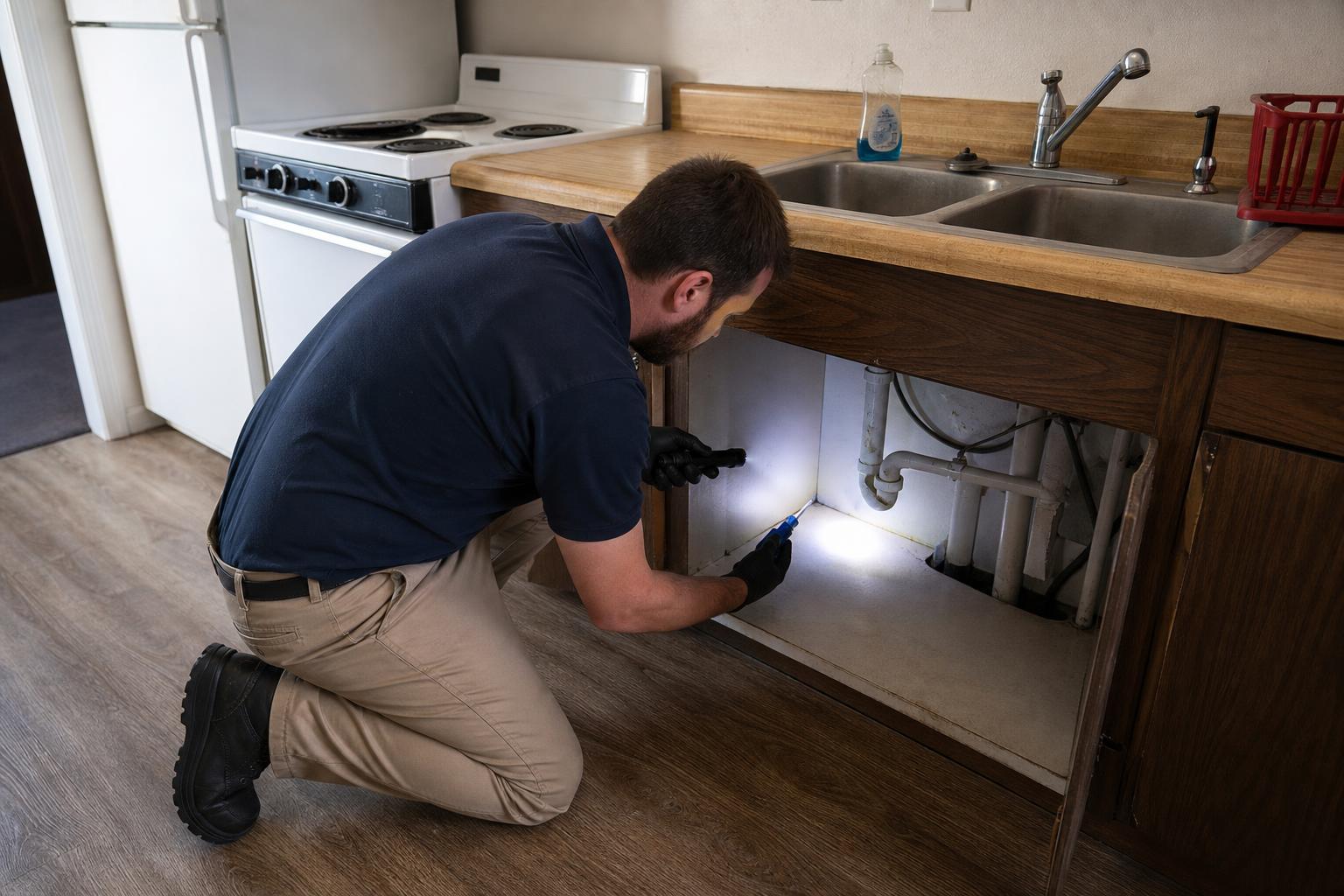
Richard, our owner, or our operations manager comes out with a flashlight, sticky monitors and often a flushing agent that drives roaches out of hiding so we can see where they are concentrated. We open the sink cabinet, pull the stove drawer and look behind the fridge. We identify the species and gauge the population.
We show you the harborage
Before we treat anything, you see what we found and where: droppings like coffee grounds along a cabinet seam, egg cases in a stove gap, a cluster behind the dishwasher kick plate. If they are coming from somewhere you did not expect, you hear it plainly.
Gel baits and IPM, aimed at the source
We place gel bait in small dots at the harborages and along the routes between them, so roaches carry it back to the colony. Where it helps, we add insect growth regulator to stop nymphs maturing, dust wall voids and outlet boxes, and seal gaps around plumbing. No fogging, no wall-to-wall spray, nothing that scatters them into the next room.
Follow-up, and a schedule where it is needed
We come back to check monitors, refresh bait and confirm the population is collapsing. For a single home that is usually one or two visits. For apartment buildings and restaurants, where new roaches arrive with any delivery or tenant, we set up a recurring schedule so it stays handled.
Sanitation: what you do, what we do
Having roaches does not mean your home is dirty. German roaches arrive in a grocery bag, a used microwave or through the wall from a neighbor, in spotless kitchens all the time. Sanitation is not about blame. It is about making our bait the best food in the room, which is what makes it work fast.
The partnership, plainly
- What you do. Wipe counters and the stovetop at night, do not leave dishes in the sink, keep pet food off the floor overnight, take the trash out, dry the sink basin. Fix the drip under the sink if there is one. Roaches need water more than food.
- What we do. Find the harborages, choose and place the right bait, treat the voids you cannot reach, seal the plumbing gaps, and return to check the result. We also tell you which of the things above matter most in your kitchen, so you are not scrubbing for nothing.
- What neither of us needs to do. Empty every cabinet, throw out the stove, bomb the house or move out for a week.
Apartments, restaurants and property managers
Roaches get a restaurant a health inspection write-up and get a property manager the same tenant complaint three times. In both cases the fix is a program, not a visit. For apartment buildings we inspect the reported unit and the units sharing walls and plumbing with it, treat them together, and contact tenants directly to schedule access. For restaurants and commercial kitchens we work around your hours, focus on the dish area, the line and dry storage, and keep written service records you can show an inspector.
See commercial and property management pest control for how recurring accounts work. If bed bugs are in the picture too, our bed bug service for apartments, rentals and businesses uses the same multi-unit approach.
Seeing roaches in the kitchen? Let’s find out where they live.
Richard or our operations manager identifies the species, shows you the source and explains the plan. Free, no pressure.
Related services
Recurring and quarterly plans
Roaches, ants and spiders handled on a schedule instead of one call at a time.
Commercial and property management
Apartments, restaurants and rentals, with tenant coordination and written records.
Rodent control
Mice use the same plumbing gaps and basement entries, and often turn up on the same inspection.
Where we treat roaches
We handle cockroach control across Southwest Indiana, including Evansville, Newburgh, Boonville, Mount Vernon, Princeton, Jasper, Washington, Santa Claus and Bloomington. See all service areas.
Cockroach questions, answered plainly
I only saw one roach. Do I really have a problem?
It depends which one. A large American roach in the basement after heavy rain is often just a wanderer from a drain. A small German roach in the kitchen is different, because they live in groups and you are seeing the one that got caught out. Check under the sink and behind the stove with a flashlight at night. If you see more, call us.
Are gel baits safe around kids and pets?
Gel baits go down in tiny amounts, in cracks, hinges and voids where roaches travel and hands and paws do not. That is one reason we prefer them over broadcast sprays. We tell you where every placement is, and our technicians are certified through the Office of the Indiana State Chemist and work under Richard’s license.
How long until the roaches are gone?
With bait at the source, you usually see a sharp drop within a week or two, and it keeps falling as the bait moves through the colony. Egg cases already laid can hatch after the first visit, which is why we come back to check monitors and refresh bait. Heavy infestations and multi-unit buildings take longer and need every affected unit treated.
Big roaches keep showing up in my basement. Where are they coming from?
Those are usually American cockroaches, coming up through floor drains, sewer lines or gaps around the foundation and utility lines, especially after wet weather. The fix is less about spraying the basement and more about the building: keeping drain traps filled, sealing the gaps they use, reducing moisture and baiting the routes they travel.
I manage an apartment building. Do you treat the whole building or just the unit that complained?
We inspect the reported unit and the units sharing walls, floors or plumbing with it, because that is where roaches go when one unit is treated alone. We treat what needs treating, set up a schedule for the building, contact tenants directly to arrange access and keep you informed in writing.