You paid for a treatment, the house went quiet, and a few weeks later you saw one on the window. Everyone asks “did it fail?” The more useful question is “why is it here?” Bed bugs come back after treatment for one of three reasons, and each one needs a different fix.
- Three causesIncomplete kill, eggs that hatched later, or reintroduction
- The hard stageEggs, which survive short heat and most sprays
- Our treatment24 hours at 135°F, then an independent K9 check
- Second opinionFree inspection, even if someone else did the work
The three reasons, and why they need different fixes
A survivor, a late hatch and a new arrival look identical on the sheet, but they are three different problems. Treat the wrong one and you pay twice.
1. The treatment did not finish the job
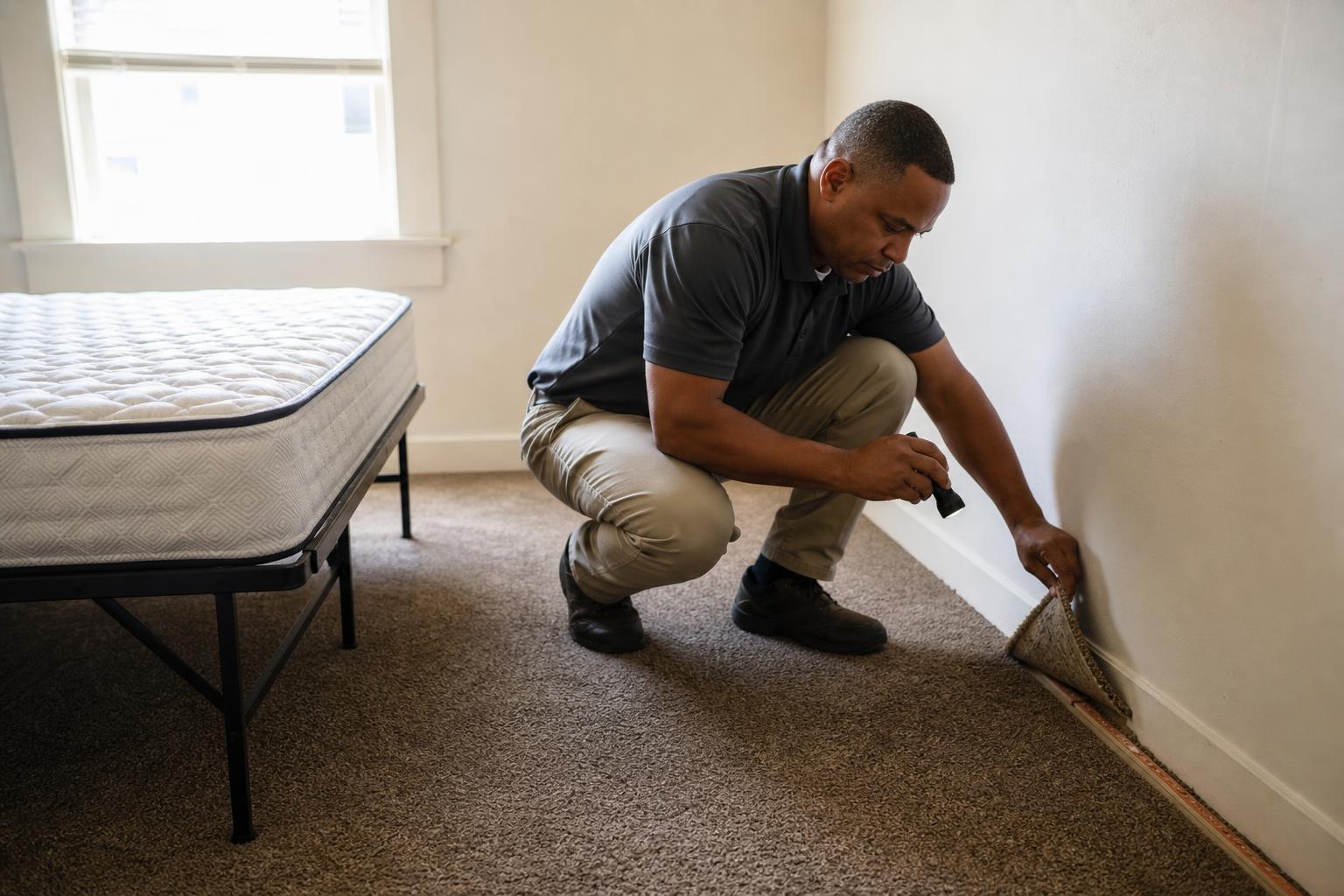
Bed bugs live inside the box spring, in headboard joints, behind the baseboard, under the carpet edge and in outlet boxes. A treatment fails when it never reaches those places.
- Cooler pockets in a short heat job. The middle of the room can read 135°F while the inside of a couch cushion or a wall void is still comfortable. Those spots take hours to catch up. A heat job that packs up after a few hours leaves them alive.
- Spray that never got there. Sprays work where they land. They do not travel into a box spring or behind drywall, so everything deeper was never treated.
- Resistance to common sprays. Many bed bug populations now shrug off the pyrethroid products spray-only jobs rely on. Heat has no resistance problem.
The fix is a more thorough treatment, not another pass of the same one. Our bed bug heat treatment holds 135°F for a full 24 hours.
2. Eggs that hatched after the treatment
This is the most common story behind “it came back,” and the one nobody explains at the door. Eggs are the hardest stage to kill: tiny, glued into seams, and shielded by a shell that ignores sprays that would drop an adult in minutes. They need sustained heat, not a warm afternoon.
That is why a job can feel like a success and still fail. On day three, every adult and nymph the treatment reached is dead. Then the eggs it only warmed hatch a week or two later, and pale nymphs show up. The treatment did not fail on day twenty. It was never finished on day one.
3. Something new walked in
Sometimes the treatment worked and a new bed bug arrived afterward. That is not a failure or a sign you did something wrong. Bed bugs hitchhike. The routes we see around Evansville: the unit next door, through wall voids and along plumbing; a bag or coat that sat in the car during treatment; luggage from a trip; a couch from the curb; a guest who has bed bugs at home and does not know it.
The fix is to find the source and treat it, not to keep treating a home that was already clear.
How to tell which one you have
One bug tells you little. The clues around it point in a direction.
| What you are seeing | Most likely cause | What fixes it |
|---|---|---|
| Mostly pale nymphs, a week or two later, same room as before | Eggs that hatched later | Heat held long enough to kill eggs, plus a follow-up before the home is called clear |
| Mixed sizes and fresh spots in the same places, within days | Incomplete kill | A longer treatment that reaches voids, furniture and clutter |
| Activity in a room never involved before, or across a shared wall | Reintroduction from an adjoining unit | Inspect and treat the adjoining units, not just yours |
| A single adult, weeks later, after a trip, a guest or new furniture | Reintroduction from outside | Find and treat the source, watch the bed |
| One slow bug in the first day or two after a heat job | A dying straggler, usually not a problem | Bag it, tell your company, wait |
Holding a bug right now? Read I found a live bed bug three weeks after treatment. For what “clear” looks like week by week, see how you will know your bed bugs are gone.
What prevents a comeback
Time at temperature
How long the heat stays on is the biggest difference between a treatment that holds and one that does not. We hold 135°F for 24 hours so voids, furniture and eggs all reach a lethal temperature. See heat treatment.
Treat the adjoining units
Treating one unit at a time is how the same tenant calls three times. We inspect the units that share walls, floors and ceilings and coordinate with tenants directly. See apartments and rentals, and if this sounds familiar, they sprayed my apartment and the bed bugs came back.
Keep the encasements on
They trap anything left inside and make new activity easy to spot. Leave them zipped for months.
Do not bring things back in yet
Anything that left the home before treatment was not treated. Ask before it comes back through the door.
A follow-up plan you can name
Before the truck leaves, you should know what happens if you see something in week two. Ours: you call, we come look.
Independent verification
After our treatment, K9 Detections, a separate company, sends a trained scent-detection dog through the home. If the dog clears it, the treatment worked, and anything later is a new arrival with a source you can track down. K9-verified See K9 inspection and verification.
If you were treated by another company
First, take a breath. Seeing a bug after you paid someone feels like the money was wasted, and it usually was not. Most of what that treatment killed stayed dead. You are dealing with what it missed or what came in after, and both are fixable.
Second, call the company that did the work and ask:
- How long did you hold the heat, and where did you measure the temperature?
- If it was a spray job, which rooms and surfaces were treated, and was the box spring opened?
- Were the neighboring units inspected?
- What is the follow-up, and is it included?
Third, if the answers are vague or you just want another set of eyes, our inspection is free no matter who did the original job. Richard, our owner, or our operations manager looks at the evidence and tells you which of the three you have. If the home is clear, we say so. If not, you get a written plan.
Saw one again? Find out why before you pay twice.
A licensed expert tells you plainly whether it is a survivor, a late hatch or a new arrival. Free, even if another company did the treatment.
Questions people ask when bed bugs come back
Does one bed bug after treatment mean the whole treatment failed?
No. One bug is a clue, not a verdict. A slow straggler in the first day or two is common. A fast, healthy bug or pale nymphs a week or two later points to hatched eggs or a missed spot. Bag it and call.
Why do bed bugs keep coming back after spraying?
Sprays only kill where they land, do little to eggs, and many populations resist the common products. In an apartment, spraying one unit leaves the neighbors untouched, so bugs walk back in through the wall.
How long after treatment can bed bug eggs still hatch?
Surviving eggs generally hatch within a week or two, which is why nymphs around day 10 to 20 is such a familiar story. An honest follow-up waits through that window. Eggs held at 135°F for 24 hours do not survive to hatch.
Can bed bugs come back from the apartment next door?
Yes, and in multi-unit buildings it is one of the most common reasons a treated unit sees them again. The fix is to inspect and treat the adjoining units as one job, with the property manager and tenants coordinated.
Will you inspect my home if another company did the treatment?
Yes. The inspection is free regardless of who did the original work. Richard or our operations manager looks at the evidence and tells you which cause you have. If it makes sense, we arrange an independent K9 detection inspection so the answer does not rest on anyone’s opinion.