Take a breath. One bed bug three weeks after treatment is a signal to act today, not proof the whole job failed. The fed adult part matters, though, because a bug that has fed has been living somewhere close to you, and that deserves a closer look right now.
- One bugA clue, not a verdict
- Fed adultIt has been feeding, so look for more evidence
- TodayBag it, note it, check the seams, call in writing
- Settle itFree second-opinion inspection, then an independent K9 check
The direct answer
People across Evansville call us from this exact spot: quiet for almost three weeks, then one crawled onto you at night. Did it work, or not?
What one bug at week three most likely means
- A survivor from a short or spray-only job. It sat somewhere the treatment never reached, waited out the quiet weeks, and came out hungry.
- An egg that hatched after treatment. It emerged as a nymph a week or two ago, has been feeding since, and has now grown into the adult you found.
- A bug that came in from somewhere else. A neighboring unit, a bag, a coat, a guest, a piece of furniture. The treatment worked and something new arrived.
You cannot tell which by looking. All three look identical in the bag. What separates them is the evidence around it and what turns up over the next few days.
The causes are explained in why bed bugs come back after treatment. This page is about the bug in your hand.
What to do today
Catch it. Do not squash it.
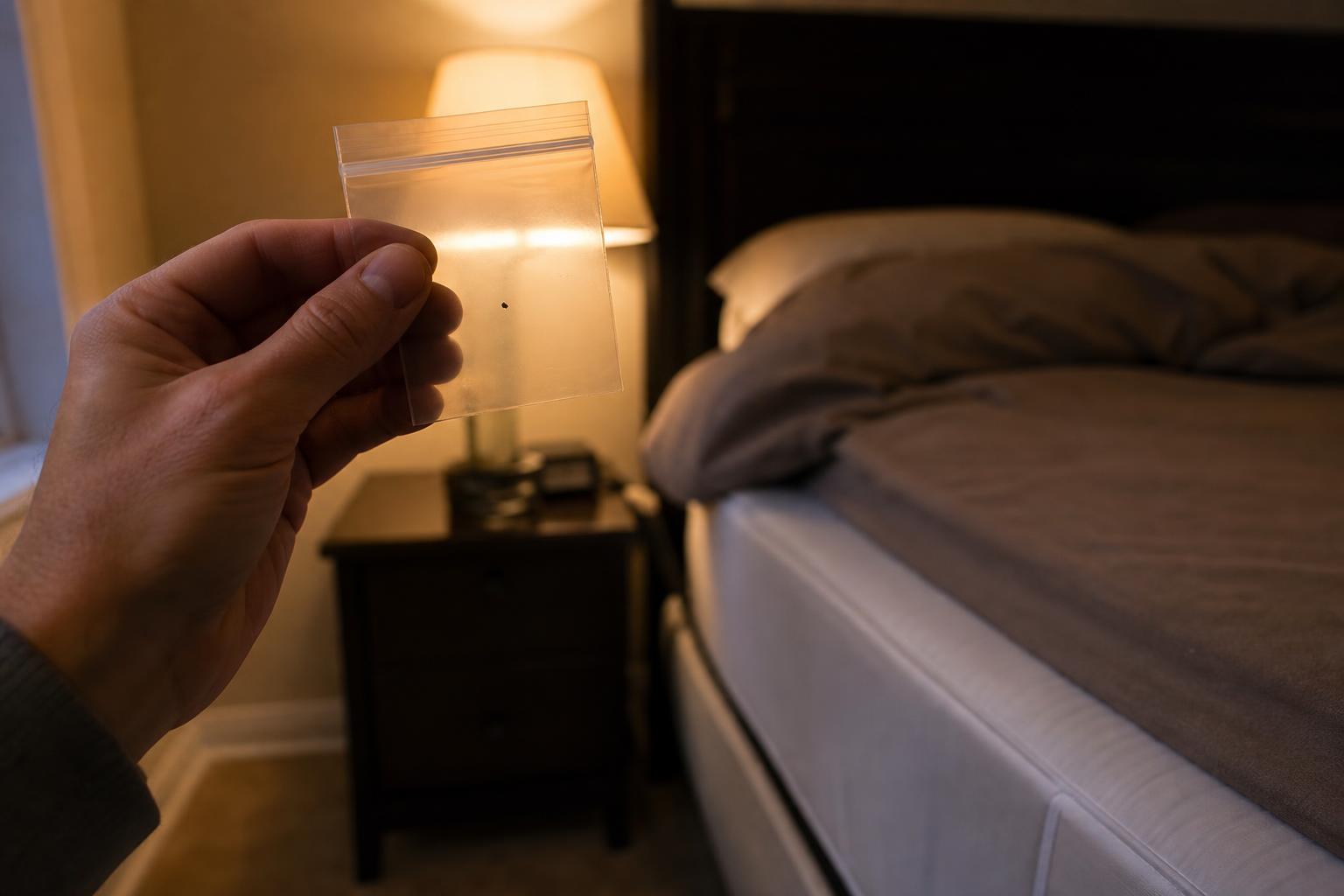
Press clear tape over it or trap it in a zip bag. A squashed bug is a smear nobody can identify. An intact one lets an inspector confirm it is a bed bug, not a carpet beetle or bat bug, and whether it is an adult or a nymph.
Write down where and when.
Which room, which side of the bed, what time. Photograph it next to a coin for scale. “On my arm at 2 a.m., left side” beats “I saw one.”
Check the seams and the encasement.
Strip the bed and flashlight the mattress seams, box spring corners, headboard joints and the encasement zipper line. You want anything fresh: dark spots that smear when damp, pale shed skins, tiny white eggs, more bugs. Old dry marks from before the treatment do not count.
Call the company that treated you, and put it in writing.
Ask for a follow-up visit, then send the same request by email or text so the date is on record. If your treatment came with a follow-up or guarantee, this is what it is for. A reputable company comes and looks without an argument.
If they argue, or the job was spray-only, get an independent second look.
Calling a fed adult at week three “normal” without coming out is not an answer. Our inspection is free no matter who did the original work. Richard, our owner, or our operations manager looks at the evidence and tells you plainly where things stand.
When a re-treatment is warranted
Nobody wants to pay for a treatment they do not need, or wait while a small problem grows. The evidence decides.
| What you are seeing | What it points to | Sensible next step |
|---|---|---|
| One adult, nothing fresh on the seams, no new bites | Most likely a single stray | Bag it, report it, watch the bed for two weeks |
| Fresh dark fecal spots on seams, encasement or headboard | Bugs have been feeding and resting nearby | Inspection, and likely re-treatment of that room |
| More than one bug, or bugs on different nights | Active population, not a stray | Re-treatment |
| Pale nymphs of any size | Eggs hatched and are growing | Re-treatment with heat held long enough to reach eggs |
| Bites resuming in new places, in lines or clusters | Something is feeding regularly | Inspection now, do not wait for a bug to confirm it |
If the original job was spray-only or a heat run of a few hours, the odds tilt toward a survivor or a late hatch, and repeating the same short treatment tends to land you back here in three weeks.
How to settle it for good
Guessing is what keeps people up at night. The way out is an answer from someone with no reason to shade it: an independent K9 detection inspection. K9 Detections is a separate company from us; their handler walks a trained scent-detection dog through your home, and the dog is trained on one thing: live bed bugs and viable eggs. It works the box spring, the baseboard gap and the furniture joints a flashlight cannot reach. If the dog clears the home, your one bug was a stray and you can stop checking the sheets every morning. If it alerts, you know where the problem is and have a written reason to insist on a proper re-treatment. K9-verified
If a re-treatment is needed, ours is built so you are not back here in three weeks. Our bed bug heat treatment holds 135°F for a full 24 hours, not a few, so the heat soaks into cushions, wall voids and clutter where a short job leaves cooler pockets. Then K9 Detections confirms the result. You do not have to take our word for it, or anyone else’s.
Do not do these
- Do not set off a bug bomb. Foggers never reach seams or voids. They scatter bugs deeper into walls and neighboring rooms.
- Do not move to another bedroom or the couch. Bed bugs follow you. Moving turns one room’s problem into two.
- Do not throw out the bed. Carrying a mattress down the hall seeds the hallway, and heat can treat the bed in place. Keep the encasement on.
- Do not spray store products over a professional job. DIY sprays drive bugs into hiding and complicate the follow-up the original company owes you. The right tool right now is a zip bag and a phone.
Treated by someone else? Our second-opinion inspection is free.
Bring us the bag. Richard or our operations manager looks at the bug, the bed and the evidence, and tells you whether it was a stray or a sign. No charge, no pressure, no argument.
Questions people ask holding the bag
Does a fed bed bug mean it fed on me?
Usually, yes, or on someone else in the home. A fed adult is rounder, darker and longer than a flat unfed one, and it has had recent access to a host. That is why it deserves more attention than a sluggish straggler found right after a heat job.
Should I keep sleeping in the same bed?
Yes. It feels wrong, but staying put keeps any remaining bugs in the room that was treated and is easiest to inspect. Keep the encasement zipped, pull the bed a few inches off the wall, and check the seams each morning.
The company says one bug at three weeks is normal. Are they right?
They might be, if it is a single stray with nothing else around it. But nobody can say “normal” over the phone. Ask them to come look. If they will not, or the job was spray-only or a short heat run, get an independent inspection so the answer rests on evidence, not reassurance.
How long should I keep watching before I relax?
About two weeks from the day you found the bug, long enough for any eggs to hatch and show up as nymphs. Nothing new in that window plus a clear K9 sweep means you are done. Anything new before then means call, do not wait.