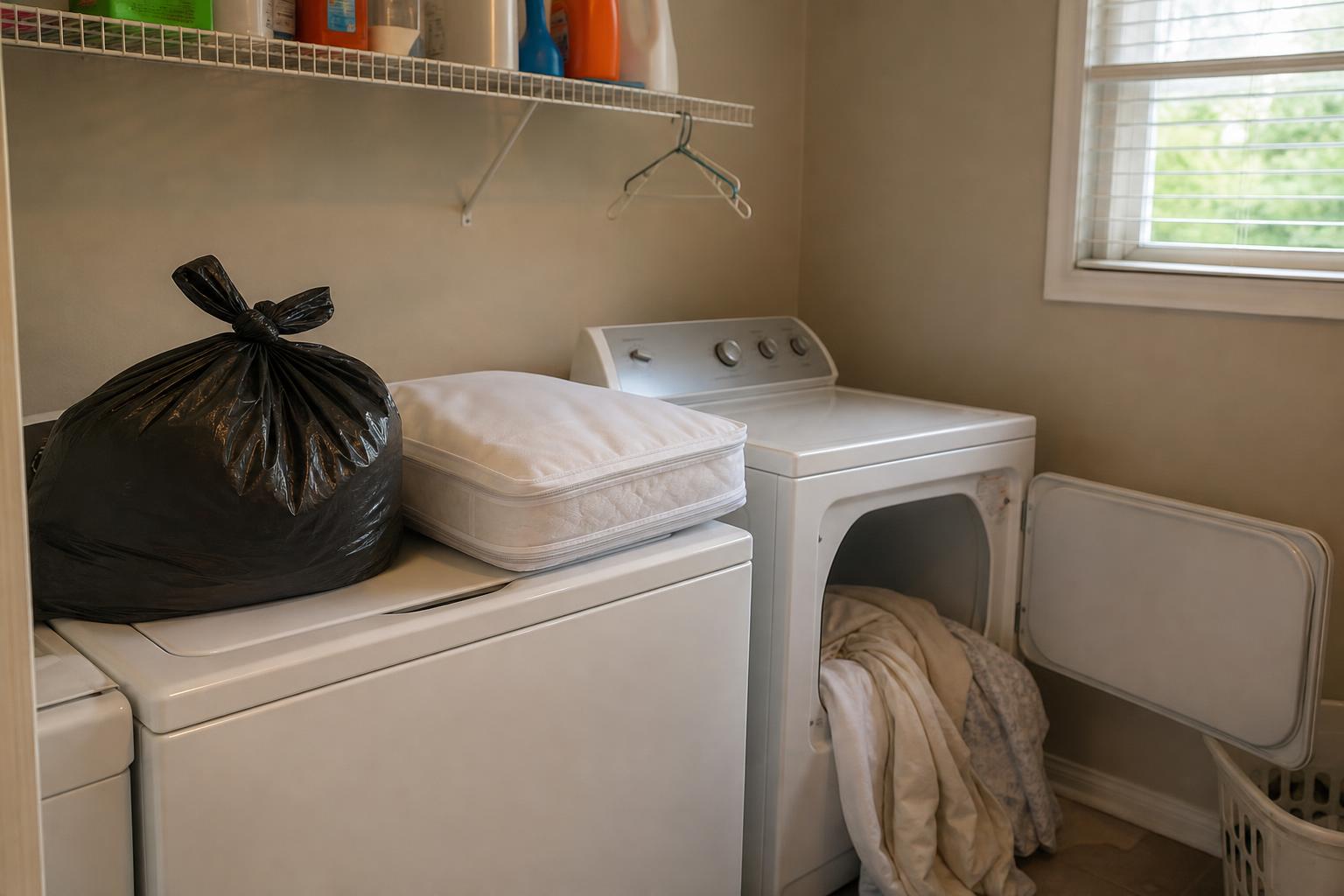
Sometimes, yes. If you caught bed bugs very early, they are in one room, and you can stay disciplined for several weeks, a do-it-yourself approach can work. Once bugs are in more than one room, inside furniture voids, or in a shared-wall building, DIY almost always turns into months of partial wins and a professional job anyway. Here is the honest version of both halves.
- DIY works bestOne room, caught early, disciplined follow-through
- DIY fails mostEggs, wall voids, second rooms, apartments
- Our treatment24 hours of heat at 135°F, then K9 verification
- First step either wayA free inspection to confirm it is bed bugs
What DIY can actually do
Not everything on the shelf at an Evansville hardware store is useless. Some of it genuinely helps, and most of it is worth doing whether or not you end up calling us.
- Mattress and box spring encasements. A zippered encasement traps whatever is inside and takes away the bugs’ favorite hiding place. Leave it on for a year or more. This is the single best DIY purchase.
- Hot laundering and high-heat drying. Bedding, clothes, curtains and stuffed animals go through the washer hot and the dryer on high for a full cycle. The dryer is what kills. Bag items before carrying them through the house.
- Careful vacuuming. Slowly along mattress seams, the box spring, frame joints, baseboards and carpet edges. Then seal the bag, tie it off, and put it in the outdoor trash right away.
- Steam on seams, done slowly. A hot steamer kills bugs and eggs on contact, but only if you move slowly enough that the fabric actually gets hot. Sweeping it quickly across the mattress feels productive and does very little.
- Decluttering. Every pile of clothes and box under the bed is a hiding place. Fewer hiding places means every other step works better.
- Interceptor cups under the bed legs. These do not get rid of bed bugs, but they tell you whether bugs are still moving. Pull the bed off the wall, keep bedding off the floor, and check the cups every few days.
Where DIY fails
The steps above treat what you can see and reach. Bed bugs make their living in the places you cannot.
Eggs and the hidden third
Bed bug eggs are tiny, pale, glued in place and tucked into cracks. Store-bought sprays do little to them. Kill every adult you can find tonight, and the eggs you missed hatch over the next couple of weeks and the cycle restarts. That is why so many DIY stories go quiet for ten days and then start over.
Wall voids, outlets, headboards and furniture joints
Bugs travel behind baseboards, into outlets, up the inside of a headboard and into the screw holes of a dresser. You cannot steam the inside of a wall or vacuum the inside of a box spring frame. Professional heat works because a room held at 135°F for 24 hours soaks into those voids. A hand-held tool never will.
Foggers and repellent sprays that scatter bugs
This is the one DIY step that makes things worse. Foggers and repellent sprays rarely reach bugs where they hide, but they do drive them out of the bed area into closets, other rooms and adjoining units. A one-room problem becomes a whole-house problem. If you have already used one, do not blame yourself. Just stop.
Apartments and duplexes
If you share a wall, floor or ceiling with another household, you can do everything right and still be reinfested through the wall. In a multi-unit building, DIY is a holding action at best, and the real fix involves the property manager and the neighboring units. See bed bug service for apartments and rentals for how that works.
The time and stress cost
People who have fought bed bugs alone for a couple of months describe something like an obsession: checking the sheets with a flashlight at 2 a.m., feeling phantom crawling, not sleeping. That is a real cost, and it is not a character flaw. If the fight is taking over your life, that alone is a good reason to let someone else carry it.
The tipping point: when to stop and call
If any of these are true, DIY has probably run its course
- You have found bugs or evidence in more than one room.
- You are more than a few weeks in and the interceptor cups are still catching bugs.
- You share a wall, floor or ceiling with another unit.
- You have already sprayed or fogged twice.
- You are not sleeping, or you are sleeping somewhere else to avoid the bed.
- A family member is reacting badly to bites.
The honest cost question
Each DIY attempt is cheap, and that is the trap. Encasements, a steamer, a few cans of spray, a second steamer because the first was not hot enough. The attempts add up, and the spread caused by foggers can make a later professional treatment a bigger job than it would have been at the start. If cost is why you are hesitating, read what bed bug treatment costs in Indiana. It explains what drives the price and what a cheap quote usually leaves out.
DIY versus professional heat and verification
| DIY (encase, launder, vacuum, steam) | Canine-Detect (24-hour heat + K9 verification) | |
|---|---|---|
| Eggs | Only where steam or the dryer reaches them | Killed by sustained heat wherever they are |
| Wall voids, outlets, furniture joints | Not reached | Heat soaks in over 24 hours at 135°F |
| Other rooms and adjoining units | Easy to miss; foggers push bugs there | Inspected first, treated as one job |
| Verification | Interceptor cups and hoping | An independent dog from K9 Detections |
| Your time | Weeks to months of repeated effort | A prep list, one treatment day, one verification visit |
| Main risk | Spreading the problem while it grows | A straggler in the first weeks, handled by a follow-up |
If you decide to call
Keep the good habits going: encasements on, laundry running, interceptor cups in place, and keep sleeping in your own bed so the bugs stay concentrated where they can be treated. Stop the foggers and repellent sprays, and stop moving furniture or bags of belongings to other rooms or a relative’s house.
Then get it confirmed before you pay anyone. Richard, our owner, or our operations manager does most initial inspections personally, and the inspection is free. He checks the seams, box spring, headboard and outlets and tells you plainly what is there. If it is carpet beetles or bat bugs, you hear that too, and you do not pay to treat the wrong insect. If it is bed bugs, you get a written plan for the 24-hour heat treatment and the independent K9 check afterward, so the last step is a clear answer instead of more weeks of wondering. K9-verified
Done fighting it alone? Let a licensed expert look first.
Free inspection across Evansville and Southwest Indiana. You find out what it is and what it would take. No pressure either way.
Questions people ask before they call
How long should I give DIY before deciding it is not working?
A few weeks is a fair test if the problem is in one room. Use interceptor cups so you have real information instead of a feeling. If the cups are still catching bugs after several weeks of encasing, laundering, vacuuming and slow steaming, the bugs are somewhere you cannot reach, and it is time for an inspection.
Do the sprays sold at hardware stores work on bed bugs?
Some kill bugs they touch directly. Most do nothing for eggs, and bed bugs have built up resistance to many common active ingredients. Repellent sprays and foggers are the ones to avoid entirely, because they push bugs into other rooms instead of killing them.
Will my DIY attempts make a professional treatment harder?
Encasements, laundering, vacuuming and steam do not. Foggers and repellent sprays can, because they scatter bugs into rooms that were clean. If you have used them, tell us at the inspection. It changes which rooms we look at, and there is no judgment about it.
Should I throw out my mattress and start over?
No, and please do not carry it down the hallway. Dragging an infested mattress through the house spreads bugs along the route, and the frame, headboard and baseboards still have them. Encase it, keep sleeping in it, and let the treatment handle the room as a whole.
What if I did most of the DIY steps and the inspection finds bed bugs anyway?
Then you did the prep for us. Encased mattresses, clean laundry and a decluttered room make the heat treatment easier and the K9 verification cleaner. Nothing you did well was wasted. It just could not reach the eggs and voids, and that is what 24 hours at 135°F is for.